
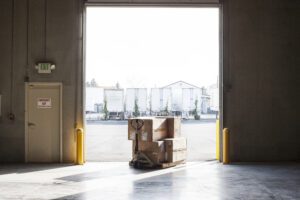
What Load Restacking Does in Real Operations
Restacking rebuilds a pallet or section of a load after shifting, compression, or poor patterning weakens it during transit. The freight may have:- Moved forward during a hard stop
- Compressed because cartons deformed under weight
- Been built incorrectly at origin
- How weight is distributed
- Which stacks are under stress
- What will happen once lifting begins
Common Scenarios That Require Load Restacking
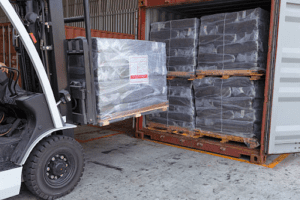 Different issues trigger restacking requests, but most fall into a few repeatable patterns on the dock.
Consignee Rejections and Unsafe Loads
Many requests to restack pallets near me begin when a consignee refuses an unsafe load. Opening the doors to find a pallet leaning toward the opening or sagging into the aisle puts both the dock and the operator at risk. A nearby rework facility can bring the trailer into a bay, stabilize the leaning freight, and rebuild the pattern so unloading can continue without causing schedule problems.Noncompliant Height, Weight, and Labeling
Restacking also corrects loads that do not meet warehouse or carrier requirements. Automated and high-bay systems depend on pallets with consistent height, weight, and labeling. If freight arrives overheight or with labels facing inward, a request for restacking pallets near me can include breaking down layers, rotating cartons, tightening the wrap, and rebuilding the load so it moves cleanly through automated and manual handling.Axle Weight and Compliance-Driven Rework
Weight distribution issues trigger another category of restack load near me calls. Loads that place too much weight on a single axle can cause compliance delays even if the freight remains intact. Rework teams shift heavy items forward, rebuild patterns for balance, or tighten partial pallets so weight spreads evenly across the deck. These corrections help drivers clear weigh stations on the first pass.How Restacking Supports Cross-Docking and Distribution Flow
Cross-dock and transload environments depend on freight arriving in stable condition. When a trailer hits the door with broken or crooked pallets, operators must restack them before scanning, sorting, or sequencing begins. Restacking becomes the bridge between inbound disruption and outbound timing, keeping freight moving without bottlenecks. Services people search for such as pallet restacking near me or load restacking near me all support the same operational goal: bringing the physical freight back into alignment with warehouse management data. When SKUs mix, cartons shift, or barcodes are damaged, restacking gives crews a controlled moment to verify counts, separate compromised items, and rebuild the load so inventory matches system expectations. That work upfront helps prevent recounts and mispicks once the freight enters storage or flow-through lanes.Carrier, Broker, and Warehouse Benefits
Restacking protects equipment time, dock safety, and the way freight presents at delivery.Keeping Trucks Productive for Carriers and Brokers
For carriers and brokers, the value of load restacking near me is keeping equipment productive and routes intact. A truck that cannot be unloaded safely is effectively out of service. Every hour the driver waits in a yard or at a dock strains daily routing. A warehouse that can accept the trailer quickly, reinforce compromised pallets, and confirm load integrity keeps schedules on track.Stabilizing Dock Operations for Warehouse Teams
Restacking also supports the warehouse team. Unstable freight slows receiving, diverts labor, and increases risk during trailer entry and lift-truck operation. Rebuilding compromised stacks restores predictable handling and keeps receiving lanes orderly. During peak cycles, that stability helps maintain throughput and reduces avoidable delays.Protecting Presentation When Packaging Is Stretched
Requests for load restacking near me rise when packaging is stretched to its limits. Lightweight cartons, mixed-case layers, or minimal bracing may hold under ideal conditions but fail during vibration or long-haul transfers. Restacking fills gaps, squares corners, and reinforces weak points through wrap or banding so the freight arrives cleanly and maintains a professional presentation.How Restacking Improves Quality and Routing Flexibility
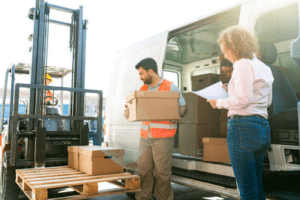 Restacking gives operators a way to adapt loads midstream while protecting both freight condition and routing plans.