
Table of Contents
In this sophisticated world of logistics, are you also the manager facing hustles in supply chain management? Have you heard the buzzword ‘Cross-docking’ which can ease the bucket of your hurdles in the advanced era of supply chain management?
Indeed this approach has taken a lot of business on top without putting in a lot of effort. You must be wondering how cross-docks work.
In a nutshell, Cross-docking is a freight movement that allows faster or immediate delivery from the supplier to the customer or dealer.
Even though this strategy of Cross-docks has worked for millions of businesses, it does have shown potential results.
Moreover, 3PL provider states that cross-docking is a successful method for businesses.
Let us dive into the benefits of cross-docking.
Benefits of Cross docking that will help your business boost rapidly
Cross docks management includes the ability to speed up your order completion, without the hustle of damaging your parcel, fastest delivery, order picking, and so on.
1. Advantages of Cross-docking include Save Money and Time :
Being in business 24/7 can be hectic for you and your mind. Worrying about your cost and time is the right concern for your business. Significantly, cross-docking has shortened the shipping process by saving you money and time.
Cross-docking can help you manage your business to grow 10 times better by their service. You must be wondering how.
Products are carried in the warehouse through a truck, as the truck arrives at your warehouse, products are transferred from one vehicle to another and then directly to the customer.
This saves your cost and time.
One of the crucial benefits of cross-docking is that the majority of expenses will be wiped out, with quick delivery from point A to point B without renting warehousing.
The cost will be far less than hiring a whole holding but you will need to hire a small facility to offload your items.
2. Reduce the Risk of Cargo Damage in your Supply Chain
Cross-docks have a pivotal role in decreasing the chances of product damage. Cross-docking can guarantee to protection of the commodities during shipping.
The right delivery at the right time without damage can increase your customer satisfaction rate.
The chances of product damage rely on how they care when handling it.
Cross-docking Requires Flexibility in the Dynamic Supply Chain:
The flexibility in a dynamic supply chain is crucial because of adaptive agility, This means reconfiguring the distribution network, improving transportation routes, or implementing just-in-time inventory management. By this approach, businesses may meet customer demands while eliminating extra inventory costs by using a responsive supply chain.
Cross-Docking Warehouses Uses Sustainable Operations:
Cross-docking facilities use sustainability and flexibility to make things work efficiently. Here’s what you need to know cross docking helps create a more environmentally friendly supply chain process that streamlines inbound and outbound processes, and transit routes, reduces delivery times, and reduces the demand for storage. Cross-docking may be the best option for businesses striving for flexibility since the cross-docking process eliminates the usage of less fuel, lowers emissions, and has a smaller ecological imprint.
Reduce Handling and Storage Risk:
Opting for logistics method cross docking reduces the risk of damaged goods, minimizing handling and storage duration. Cross docking services move products efficiently from one place to another eliminating the likelihood of damages and enhancing overall product quality.
Employee Training and Skill Growth:
Since the workflow has a direct impact on the company’s capacity to adapt. providing ongoing training and skill development guarantees that employees have the know-how to adapt to advanced roles, procedures, and technologies as the business evolves. This approach increases the workflow efficiently increases sales and helps a company to grow.
3. Cross-Docking Operation Improves Customer Satisfaction:
Have you heard that one long-time customer is better than a hundred new customers?
With utilizing cross-docking the number of hands-on items is less so the damaging ratio is.
Mostly, the facilities offering these services are located in geographical areas which are probably close to your destination.
Hence, based on inventory the parcels are delivered within 24 hours or less which increases your satisfied customer ratio.
Cost saving, receiving parcels on time and increased product quality due to cross-docking factors also increase the number of customers and capture additional markets.
Also Read: How does Cross docking work?
Cross-Dock Uses Advance Technologies:
Cross-docks make use of advanced technologies to enhance the entire operation to run smoothly and optimize the supply chain strategy which helps managers to make informed decisions about adopting their operations. Data-driven technologies help cross-docking managers stay ahead of trends and capitalize on emerging opportunities which instantly gives excellent outcomes in a business.
4. Successful Cross-docking Makes less Room for Error:
Running a business putting your all efforts can not let you make any errors. Delivering parcels especially, perishable goods are always a concern.
Cross-docks delivers the perishable goods within time or before their expiry date or with a best-before date to be used and in great condition.
However, the supply chain has made this complex process very easy.
Cross-docking involves less material handling and helps preserve the quality of goods.
The quality of the products with short shelf life remains the same, products like food and beverages, vitamins, makeup, medicine, and supplements.
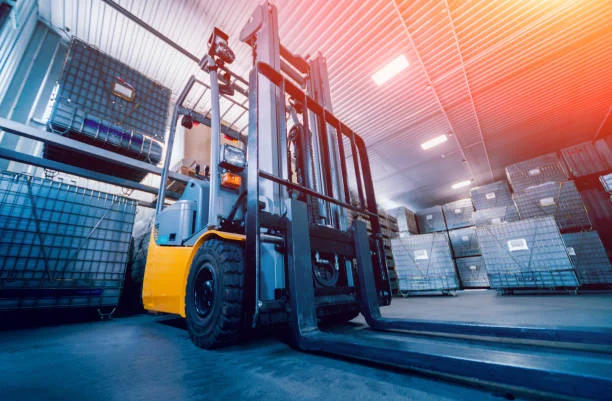
For such products as soon as they reach they are hauled via, a conveyor belt, Pallet truck, or forklift to the outbound dock.
Because the product does not have to be scanned and stored in a warehouse, it is immediately picked up and shipped.
5. Common Method of Cross-Docking Reduces Labor Cost:
It is difficult to run a business and warehouse yourself together. Whether working in a company or working for a company, the need for laborers is always needed.
But when it comes to cross-docking fewer workers are needed to transport the items from the container to the storage as well as for safety measures.
Supervisors also have to keep the pros and cons in mind when handling the commodities.
And ensuring that the warehouse is functioning efficiently and there is always room for incoming cargo.
According to research, cross-docking can be very beneficial for your business.
However, cross docks drop these expenses, items are delivered as soon as they arrive. The deduction of cost is one of the greatest benefits of cross-docking.
6. Methods of Cross-Docking will Fit the latest technological advancements:
Life has been a Roller coaster for everyone and adopting certain changes. Soon cross-docks will embrace new technologies in the logistics industry.
For instance, the use of automotive trucks will be introduced while few are still working in EU countries.
Soon, the cost of labor will also be eliminated from your business for shipping your product across the nation.
For instance, the entire procedure will be autonomous.
Also Read: The Role of Technology in Cross-Docking
7. Enhance the Efficiency of Material Handling:
Another benefit of cross-docking is product handling is simple and smoother. It impressively improves productivity and functioning performance.
In addition, it provides better operations for scanning, label verification, in-motion labeling, measurement, and other related tasks.
8. Warehouse Management System Can Help Protect the Environment:
This method complies more virtually with supply chain sustainability principles since it assures that each vehicle is used for all deliveries rather than used for a few from the warehouse. Consequently, cross-docking eliminate the need for huge trucks and vans.
In addition, expenses like electricity and fuel running a warehouse are kept to a minimum.
Benefit From cross-Docking:
- The cost of inventory management as well as the cost of labor and less cost of labor inventory.
- Reduce the risk of damage in a distribution center
- Traditional warehousing decreases warehouse cost
- Advanced warehouse management system improves customer satisfaction
- Post-distribution cross-docking increases more work in less time
- Pre-distribution cross-docking reduces Lead Time
- Cross-docking can provide logistics operation to the entire supply chain.
Final verdict
However, all these benefits of cross-docking systems help prove the key to success, Implementing cross-docks will help you provide your business grow with new opportunities in less time, save money, increase efficiency, and help your business boost.
FAQs: Advantages Of Cross Docking For Businesses
What is cross docking, and how does it differ from traditional warehousing methods?
Explore the definition and distinctions between cross docking and conventional warehousing approaches.
What are the key advantages of implementing cross docking in a business’s supply chain?
Learn about the specific benefits that businesses can gain from incorporating cross docking into their logistics and distribution processes.
How does cross docking contribute to reducing lead times in the supply chain?
Understand the mechanisms through which cross docking can streamline supply chain processes, leading to decreased lead times.
In what industries or types of businesses is cross docking most effective, and why?
Explore the sectors or business models where cross docking proves to be particularly advantageous and the reasons behind its effectiveness.
What technologies are commonly used in cross docking operations, and how do they enhance efficiency?
Discover the technological solutions employed in cross docking, such as RFID systems and automated sorting, and their roles in improving operational efficiency.
Are there any challenges associated with implementing cross docking, and how can businesses overcome them?
Learn about potential challenges in adopting cross docking and strategies to address and overcome these hurdles effectively.
How does cross docking contribute to reducing warehousing costs for businesses?
Understand the cost-saving aspects of cross docking, including reduced storage expenses and improved inventory turnover.
Can businesses of all sizes benefit from cross docking, or is it more suitable for larger enterprises?
Explore whether cross docking is scalable and applicable to businesses of varying sizes, including small and medium-sized enterprises (SMEs).
What impact does cross docking have on order fulfillment and customer satisfaction?
Examine how cross docking practices influence order fulfillment processes and contribute to enhancing overall customer satisfaction.
Are there any environmental benefits associated with cross docking, and how does it align with sustainable business practices?
Learn about the environmental considerations of cross docking, including its potential contribution to sustainable and eco-friendly supply chain practices.