
Every logistics operation depends on predictable freight movement. A railway siding connects a warehouse or cross-dock directly to the rail network for on-site car handling. With a dedicated spur in place, warehouse teams can plan around switching windows, car placement, and inventory demand, conditions that remain steadier than truck-only lanes affected by weather, market shifts, and regional capacity.
What A Railway Siding Does For Warehouse Operations
A rail-served warehouse relies on the siding as the working interface between long-haul railcars and day-to-day dock activity. As a short, on-site track segment separate from the mainline, a railway siding provides space to stage, load, and unload cars until the carrier returns. This control over dwell time, car placement, and handling cycles reduces dependence on congested truck operations.
Staging And Car Handling On The Siding
The siding functions as a controlled zone where railcars are positioned for efficient loading and unloading. Crews manage car sequencing, coordinate timing with the carrier, and maintain steady throughput during busy periods by using the siding as the primary handling area.
Track Layout And Switching Windows
Track alignment, dock proximity, and unloading geometry shape forklift travel paths and equipment patterns, while longer sidings allow several cars to be handled at once. Consistent switching windows define the operating tempo: when carriers place cars at predictable times, labor, dock work, and inventory movement align to the same cadence. Coordination with short lines or Class I carriers further supports steady flow by ensuring the correct cars arrive ahead of each unload or outbound cycle.
Why Rail Access Matters For Heavy, Dense, And Long-Haul Freight
Rail is built for freight categories that overwhelm truck capacity or require consistent long-haul performance.
Freight Types That Move Best By Rail
- Steel plate, coil, and structural sections
- Lumber and engineered wood
- Aggregates and minerals
- Packaged dry ingredients
- Chemicals, resins, and industrial liquids
These materials benefit from consolidated inbound movements that support predictable labor and staging, and on dense lanes a single railcar can replace three to four truckloads, turning several separate arrivals into one planned handling event.
How Rail Changes Cost And Throughput
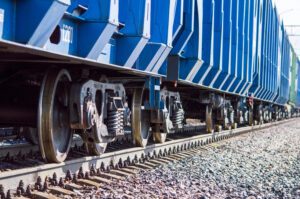
Rail delivers steadier long-haul economics because pricing depends on distance, density, and network utilization rather than short-term market swings. When a warehouse uses a railway siding for consistent volume, drayage declines, yard congestion eases, and scheduling becomes more reliable.
For packaged materials, a boxcar often equals four or more dry-van truckloads, consolidating inbound volume into fewer handling cycles. Organized inbound groups and sequenced outbound releases help keep throughput stable during periods of highway disruption.
Operational Advantages You Gain With A Rail-Served Facility
Alt text: Grain elevator complex beside a railway siding with freight cars positioned for loading.
Rail consolidates long-haul freight into predictable inbound blocks that the warehouse can manage directly.
Control Of Inbound And Outbound Timing
Cars positioned on the siding give the warehouse control over loading order and movement. Outbound cars enter the rail network without drayage, maintaining stability when trucking capacity tightens.
Release Valve During Congestion
Rail spur access keeps freight moving during chassis shortages, ramp congestion, or weather-related delays. Direct access lets boxcars and specialty equipment bypass crowded intermodal ramps.
Scheduling Stability And Daily Warehouse Flow
Predictable switching windows keep cycles consistent, allowing forklifts and cranes to work continuously when multiple cars occupy the siding. With inbound spacing and car handling tied to rail schedules, labor, dock operations, and truck dispatch align more naturally during high-volume periods.
Yard And Labor Efficiency
On-site car placement reduces yard congestion, improves equipment access, and stabilizes staffing demands across peak periods.
Long-Haul Stability And Volatility Control
A railway siding centralizes inbound volume and reduces exposure to truck-only volatility. As market conditions shift across regions, rail maintains consistent long-haul flow and supports dependable warehouse performance.
Applications Across Manufacturing, Agriculture, And Cross-Border Lanes
Rail supports manufacturing inputs, agricultural materials, and long-distance movements that require coordinated handling.
Industrial And Manufacturing Inputs
Steel components
- Concrete additives and minerals
- Resin pellets
- Palletized building materials
- Oversized or overweight industrial inputs
Staging along the siding keeps production inputs accessible without disrupting downstream activity.
Agricultural And Food-Grade Commodities
Bulk grain, flour, starches, and malt move efficiently when pits, hoppers, and conveyors align with track placement, reducing handling steps and improving accuracy.
Cross-Border And Multiregional Lanes
Dedicated siding access supports freight moving between Canada, the Midwest, the South, and the Gulf. Controlled track space keeps unloading organized during volume surges.
Warehouse Layout Requirements For Rail Integration
Facilities with rail must support safe movement, equipment access, and efficient load paths. Critical design elements include:
- Reinforced slabs for railcar and equipment loads
- Wide aisles and unobstructed travel paths
- Adequate clearances for forklifts, cranes, and unloading arms
- Defined stopping points for gravity or pneumatic transfer
Even a relatively short siding can hold multiple railcars, giving mid-size facilities meaningful staging capacity directly on the property.
Rail In Cross-Dock And Network-Wide Operations
Rail siding access ties local cross-dock activity to broader lane planning, turning each site into both a transfer point and a control node for regional freight.
Rail-To-Truck Transfers In Cross-Docks
Inbound railcars can be broken down and transferred directly to outbound trucks with minimal storage. Consolidated car arrivals reduce truck traffic and shorten delivery windows when multiple lanes converge at a single facility.
Role In Multi-Warehouse Network Design
A dedicated siding functions as a strategic consolidation and redistribution point. Fewer touches reduce damage and improve inventory accuracy.
Coordinating Timing Across Modes
Rail timing, warehouse processing, and outbound truck cycles must align. Direct siding access reduces storage between modes and keeps long-haul lanes synchronized with regional distribution schedules.
How The Rail Spur Extends The Warehouse
Alt text: Freight car parked along a railway siding beside an industrial warehouse.
The spur physically connects the site to the national rail network, enabling freight to move directly onto the property. Spur geometry and alignment require:
- Load-bearing track structure
- Adequate equipment clearances
- Safe switching geometry
- Track layout aligned with warehouse flow
When these components connect cleanly, long-distance freight moves consistently across all seasons.
Partner With Cross Docks & Storage For Rail-Enabled Throughput
We provide warehousing and cross-dock services that integrate smoothly with rail-enabled operations. Our team focuses on efficient rail-to-truck transfers, organized freight flow, and rapid outbound distribution across regional truck networks. Contact us today for more information.